Retention Starts in the Work Order
Good HVAC technicians can handle hard work. What wears them down is preventable friction. Vague work orders. Missing site history. Poor handoffs. Extra calls back to the office. Customer questions they were not set up to answer. Rework that could have been avoided.
For a commercial HVAC service company, those problems do not stay in the field. They show up in the schedule, in overtime, in customer confidence, and eventually in technician turnover. That matters because hiring is not getting easier.
The Government of Canada forecasts a strong risk of labour shortage of mechanics nationally from 2026 to 2033. It also reports that 25% of workers in the occupation were already age 50 or older in 2023.
For independent commercial HVAC owners, retention is a big challenge, and anything that can help reduce turnover can be a strategic move.
Analysing the data
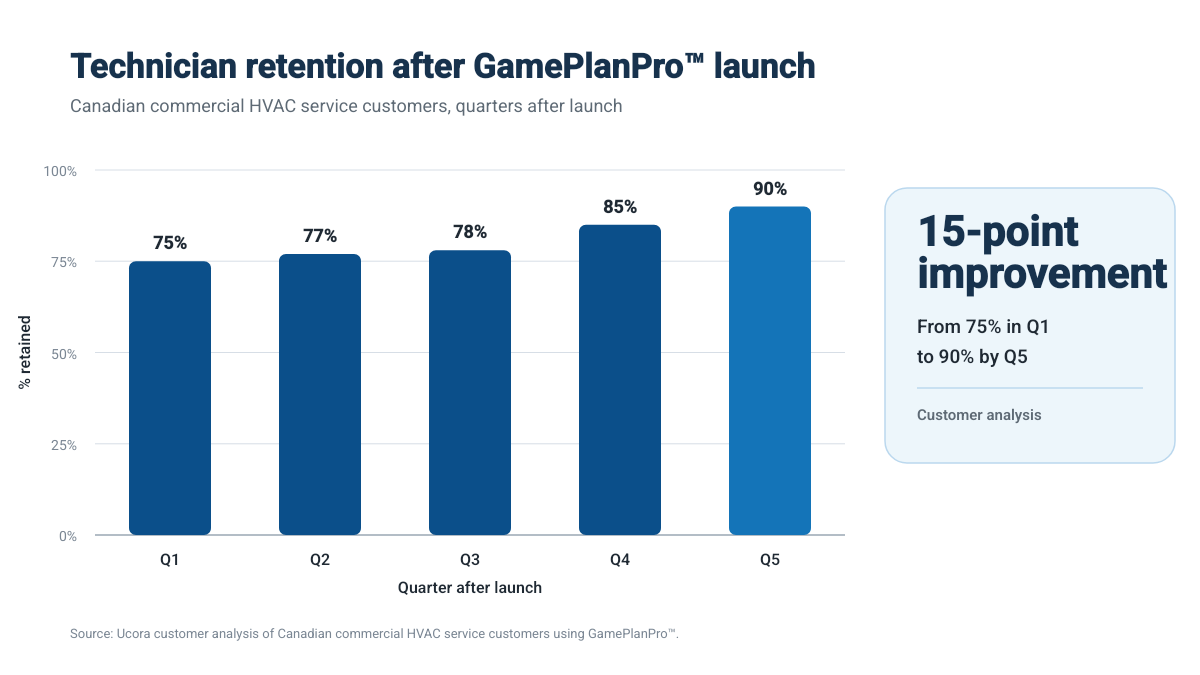
Ucora analyzed technician retention across Canadian commercial HVAC service companies that switched to the technician-focused GamePlanPro™ HVAC service system.
The pattern was was consistent: retention increased from approximately 75% in the first post-launch quarter to 90% by the fifth quarter - a 15-point improvement.
For a 20-technician team, that is roughly the difference between losing five technicians and losing only two.
This matches owner experience: Technicians are more likely to stay when the workday feels professionally run.
Why workflow matters
Software does not fix retention by itself. Pay matters. Leadership matters. Training matters. So does how the job actually feels day to day.
Research backs the practical point. Gallup’s employee engagement study found that engagement is related to business outcomes including turnover, productivity, profitability, safety incidents, absenteeism, and quality.
That means people are less likely to leave when the work is clear, supported, and not needlessly frustrating.
Autonomy matters too. A workplace meta-analysis of 72 studies and more than 32,000 employees found that leader autonomy support is strongly associated with work motivation and retention.
For service teams, autonomy does not mean loose standards. It means the technician has the plan, site history, scope, expectations, and authority to do the job properly.
The takeaway
If your best technicians are constantly dealing with unclear work, weak handoffs, and missing information, the business is making their job harder than it needs to be.
GamePlanPro is built around a different operating model: better site information before the call, better context in the field, and more confidence for technicians to execute.
Retention does not start when a technician gives notice. It starts much earlier.
Often, it starts in the work order.